Đọc thử · Chương 1 · Tiếng Anh
A World Waiting for Someone
Around 4 BC · Galilee, Judea, and all around the Mediterranean
That spring, the people of Nazareth saw smoke.
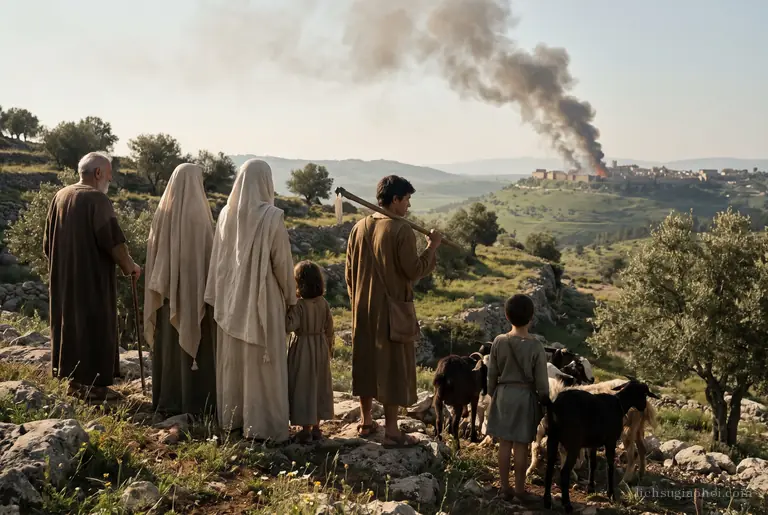
The smoke rose in the north, a morning’s walk from the village, over Sepphoris, the largest city in Galilee. The two places were only about four miles (six kilometers) apart. King Herod the Great had just died, after more than thirty years on the throne as Rome’s client king, and his household had fallen into bitter strife, his sons and their factions tearing at one another over the crown.
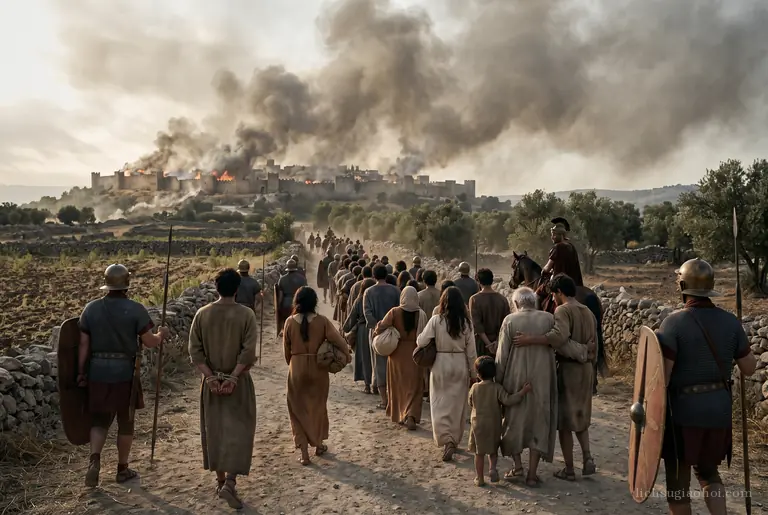
The Jewish historian Flavius Josephus tells what happened next. A man named Judas, son of a bandit chief called Hezekiah, saw his chance in that empty throne. He gathered a crowd around Sepphoris, broke into the royal palace there, “seized upon all the weapons that were laid up in it, and with them armed every one of those that were with him.” Before long Publius Quinctilius Varus, the Roman governor of Syria, came down from Antioch at the head of two seasoned legions. His soldiers, Josephus writes, “took Sepphoris, and made its inhabitants slaves, and burnt the city.” Then Varus sent men through the countryside to hunt down the leaders of the revolt, and “the number of those that were crucified on this account were two thousand.” The crosses stood along the roads leading to Jerusalem.
The farmers of Nazareth must have stood on the hillside and watched that smoke drift across the spring sky for a long time, in silence. They knew better than anyone what it cost, in blood and tears, to stand up to Rome. They also knew something else, something read aloud in the synagogue every Sabbath: in his own hour God would send a Savior to set his people free. One day, Someone would come.
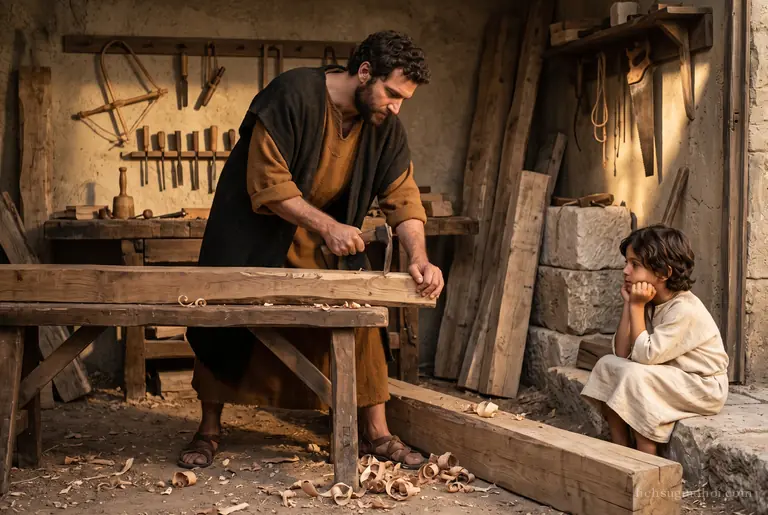
And in that small village, a few years later, a boy would grow up in his father’s carpentry shop, among the smell of fresh-cut timber and the daily rhythm of saw and chisel.
The story of that boy would spread fast, far faster than anyone then could have imagined. Part of the reason was the world he was born into. Three bridges had been laid across the Mediterranean world: the stone roads of Rome, the common Greek of traders, and Israel’s long waiting. They all came together at that time. Paul would later call it the moment “when the fullness of the time came” (Gal 4:4). When that boy, grown to a man, was crucified outside Jerusalem, the notice fixed to his cross was written “in Hebrew, in Latin, and in Greek” (John 19:20). Three worlds met on one piece of wood.
The Roads of Rome
In 30 BC, a merchant shipping cloth from Syria to Italy had to cross provinces still scarred by civil war, where rival generals set up toll posts to squeeze passing traders, and brave seas where pirates lurked behind headlands and in narrow straits. Each place had its own laws, each its own money, and every border meant changing coins again. Getting there was luck. Getting home was a blessing.
Then one man changed all that. Octavian, the adopted son of Julius Caesar, defeated his rivals and in 27 BC received from the Senate the title Augustus, “the Revered One.” He is the emperor whose name Catholics hear every Christmas: “In those days, a decree went out from Caesar Augustus” (Luke 2:1). From then on, the lands around the Mediterranean entered an age of peace the Romans were proud of, the Pax Romana, or Roman Peace. It lasted nearly two hundred years.
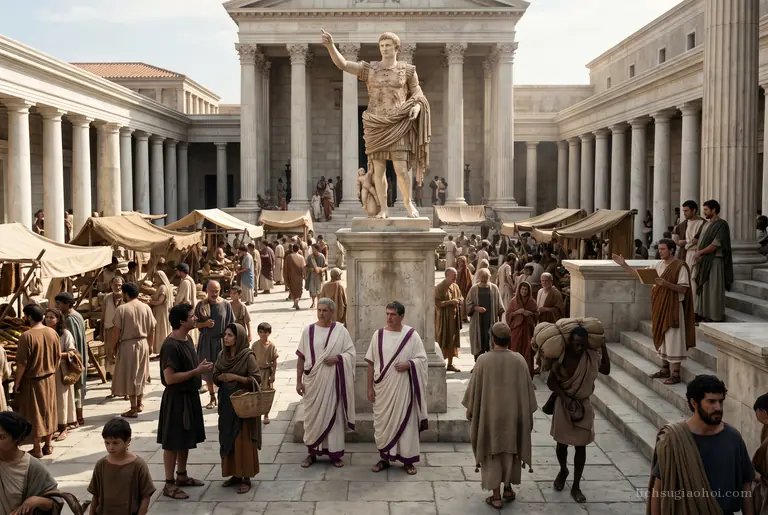
Augustus made sure no one forgot it. Near the end of his life he wrote an account of his own reign, to be cut on bronze pillars in front of his tomb in Rome, and copies were carved on temple walls across the empire. One of them survives almost whole on the Temple of Augustus and Rome in Ankara, in modern Turkey. In it the old emperor counts the closings of a temple door. The doors of the temple of Janus, the two-faced god of beginnings and doorways, were shut only when the whole empire was at peace. Before his birth, he wrote, they “closed but twice in all since the foundation of the city.” Under him, “the senate ordered to be closed thrice.”
That peace traveled on stone roads. The Romans built roads the way others built fortresses. They dug a deep trench, filled it with rubble set in mortar, packed a layer of gravel on top, and fitted large flat paving stones over all of it. The surface was crowned slightly in the middle, so rainwater ran off into ditches on either side. Milestones marked the distance, one at every Roman mile of a thousand paces, about one and a half kilometers. About a day’s journey apart stood stations, called mansiones, where soldiers and travelers could eat, sleep, and change horses. Over the centuries the network grew to tens of thousands of miles, linking Spain with Syria and misty Britain with the Nile.
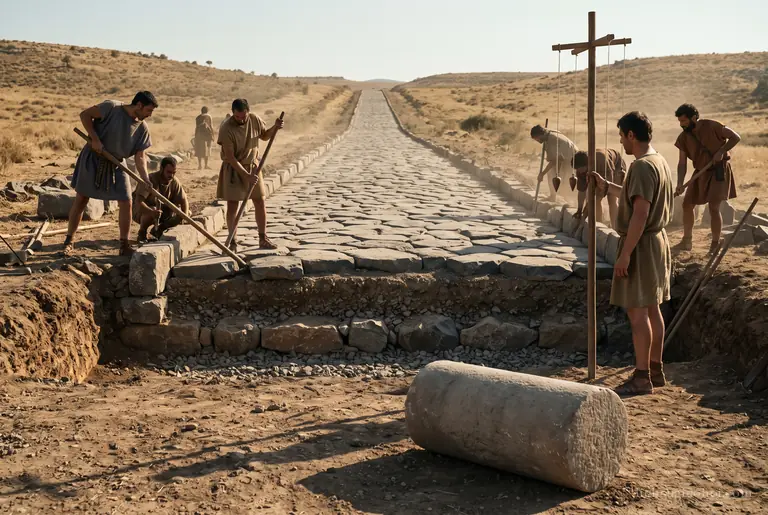
In 20 BC Augustus set up a gilded bronze column in the Forum at Rome, the Golden Milestone, Milliarium Aureum, which Romans thought of as the point where their great roads began. The oldest of those roads, the Appian Way, had been started in 312 BC. Stretches of it can still be walked on the edge of Rome today, its basalt paving stones worn with the twin ruts of wagon and chariot wheels.
The roads were built so that legions could march fast to crush any province that rebelled. But they also carried creaking merchant carts, official couriers, families on their way to visit relatives, and news. Something that happened in Antioch would be told over cups of wine in the taverns of Rome a few weeks later.
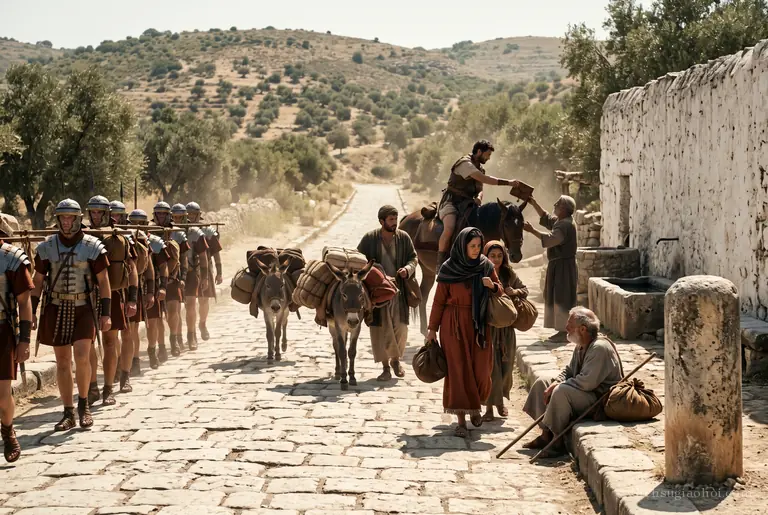
Augustus wanted the news faster still. The Roman writer Suetonius says that, so that what was happening in each province could be “reported and known more speedily and promptly,” the emperor first posted young runners at short intervals along the military roads and later used carriages. The runners passed sealed dispatches from hand to hand, day and night. The imperial post, the cursus publicus, outlived him by centuries.
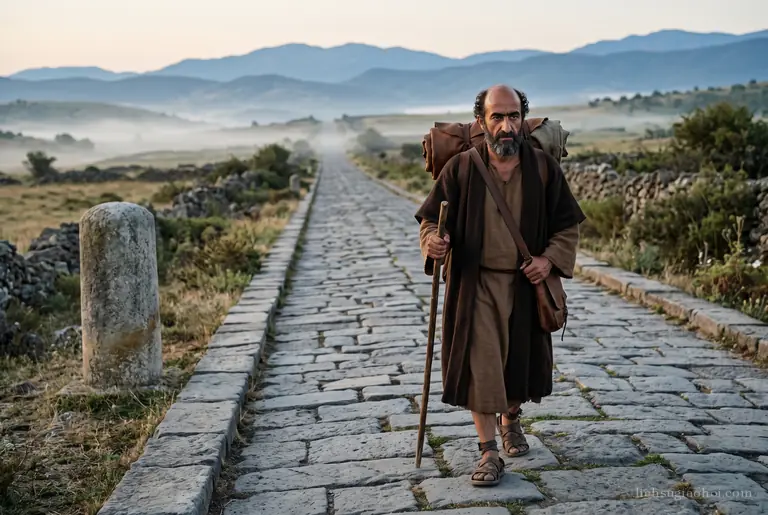
A few decades later, a slight tentmaker named Paul, his heart on fire, would sling his pack over his shoulder and walk these same roads from city to city, carrying good news. Rome had already built the roads.
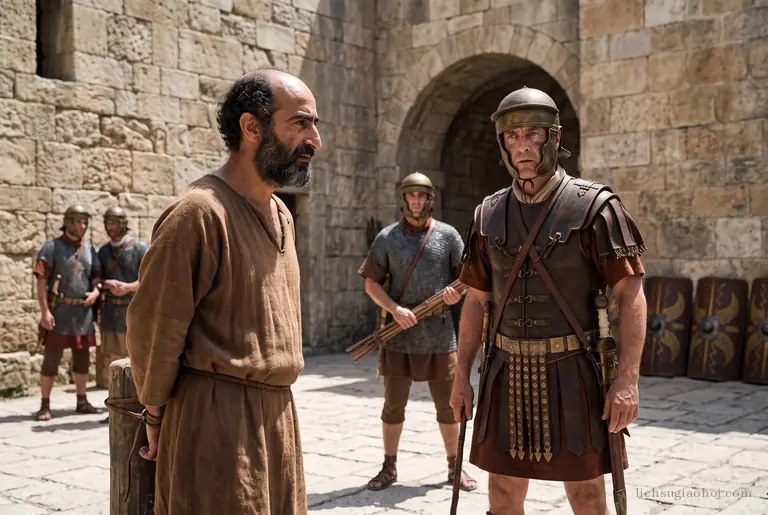
Rome brought one more thing: law and citizenship. A Roman citizen could not be flogged without a trial, and he had the right to appeal all the way to the emperor. The Acts of the Apostles tells how an angry crowd in Jerusalem once mobbed and beat Paul, and Roman soldiers arrested him and stretched him out with leather straps to examine him under the lash. He calmly asked the centurion standing by a single question: “Is it lawful for you to scourge a man who is a Roman, and not found guilty?” The officer was alarmed, and the flogging was called off at once (Acts 22:25–29).
Two years later, on trial before the Roman governor at Caesarea, with enemies plotting to kill him on the road, Paul used his other right as a citizen. “I appeal to Caesar!” he said (Acts 25:11). Rome then had to give him a ship, a centurion, and an armed escort, and carry him across the sea to the emperor’s court (Acts 27:1).
Still, Rome was anything but gentle. Its peace was kept by the sword. The price was heavy taxes, grain seized to feed foreign garrisons, soldiers in every town, and crosses planted along the roadsides, where the crucified were left for days in the sun and wind. Crucifixion was not a Roman invention: the Persians and the Carthaginians had used it long before. But the Romans used it often and without mercy, as a warning to slaves and rebels: let no one dare resist. They chose the places on purpose. “Whenever we crucify the guilty,” says a Roman book of practice speeches long attributed to the teacher Quintilian, “the most crowded roads are chosen, where the most people can see and be moved by this fear.” The Roman lawyer and statesman Cicero called it “the cruelest and most hideous punishment.” The smoke over Sepphoris that year, and the two thousand crosses outside Jerusalem, were one such warning.
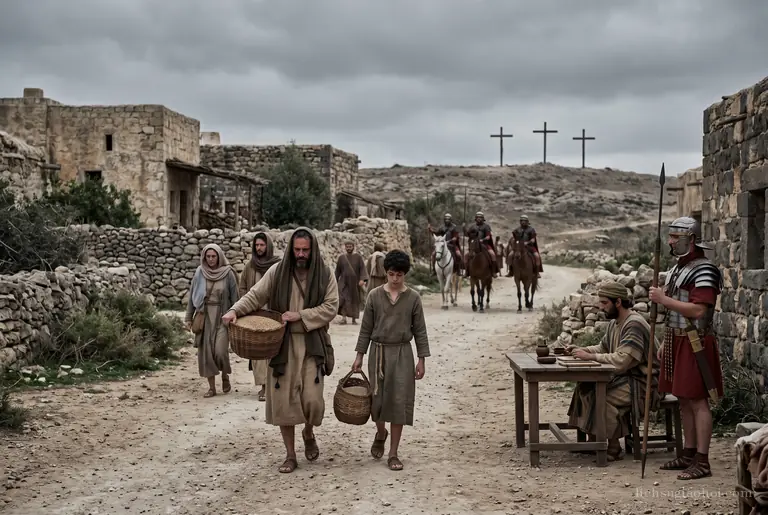
In the Jewish homeland, the Roman yoke weighed heavier still. A farmer on the hills of Galilee or a fisherman on its lake paid three times over: poll tax and land tax to Rome, heavy levies to keep the court of Herod and his heirs, and a tenth of his harvest along with the yearly half-shekel to the Temple. Whenever villagers carried their baskets of produce past a guard post where soldiers leaned on their spears, they kept their eyes on the ground. A question smoldered in every heart: Lord, how long?
One Language for the Whole World
The roads were there. But when people met on them, what language did they speak?
The answer went back three centuries. Alexander the Great, the young king of Macedonia, had led his army from Greece across Asia Minor, Syria, Egypt, and Persia all the way to the Indus River. He died suddenly in Babylon in 323 BC, not yet thirty-three, and his empire was soon divided among his generals. But he left behind something that outlasted any empire: the Greek language. Across the East, Greek-style cities sprang up, each with its public square, the agora, an open-air theater, a gymnasium, libraries, and people who spoke Greek.
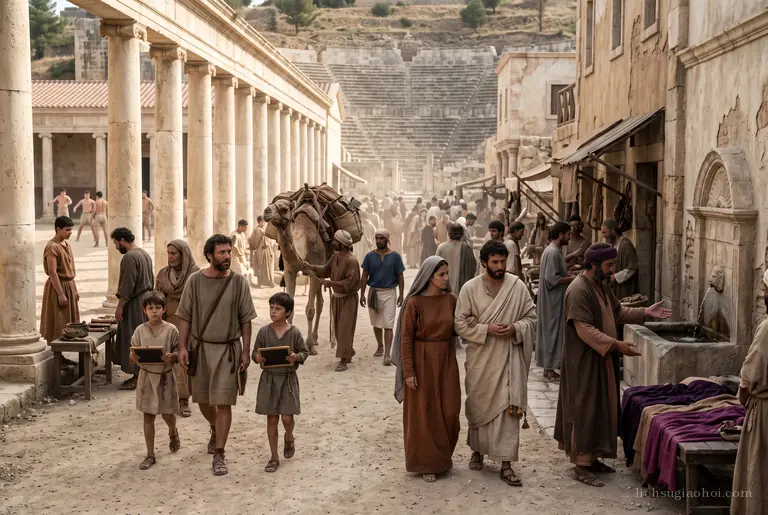
This was not the polished Greek of the philosophers in Athens. People called it Koine, meaning “common,” the plain, easily learned Greek of merchants, craftsmen, sailors, and soldiers. A soldier in a garrison in upper Egypt, an old woman selling olive oil on a street corner in Ephesus, a deckhand in the harbor of Corinth: they could all understand it. Even in Rome, where Latin stayed the language of the Senate and the nobility, many of the poor, the slaves, and the immigrants spoke more Greek than Latin.
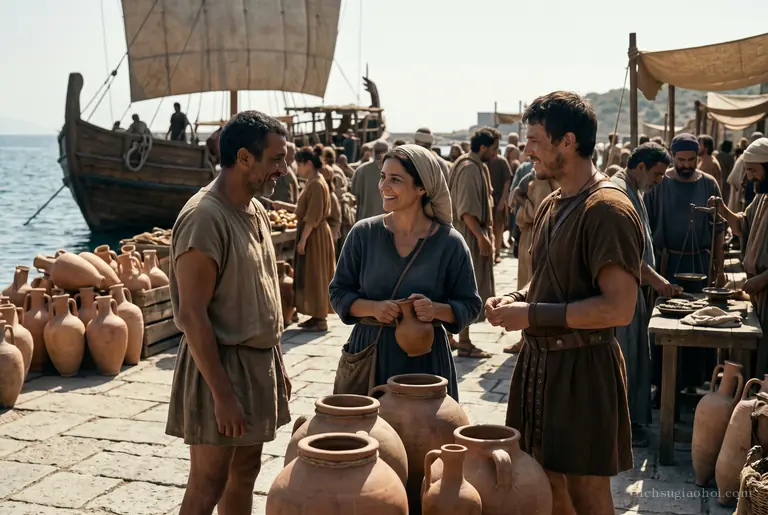
Not every Roman liked it. Around AD 100 the poet Juvenal grumbled, “I cannot bear, citizens, a Greek Rome.” The Orontes, the river of Syrian Antioch, had long since flowed into the Tiber, he complained, and brought its language, its flutes and harps, and its ways along with it.
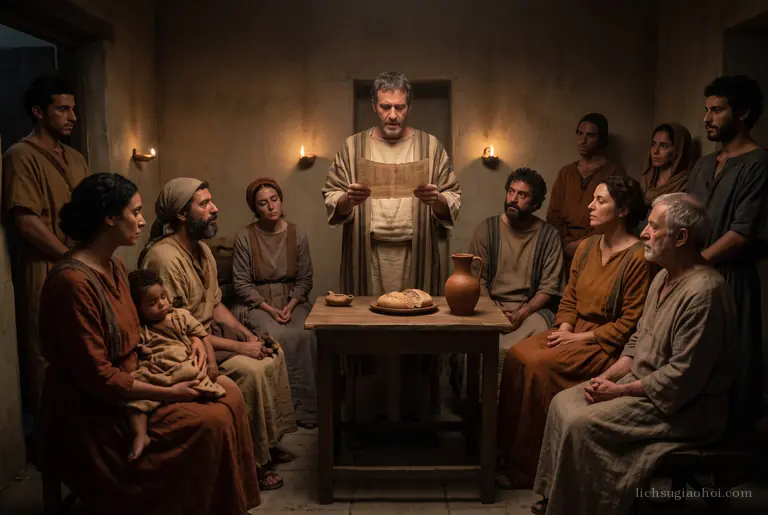
Because of that common tongue, a letter written on papyrus in Corinth could be read aloud at an evening gathering of the community in Rome, and everyone from an unlettered household slave to a Roman noble could follow it with no need for an interpreter. That is exactly what happened with Paul’s Letter to the Romans, written in Greek, most scholars think, while he was staying in Corinth. Paul dictated it, and near the end the man holding the pen added a line of his own: “I, Tertius, who write the letter, greet you in the Lord” (Rom 16:22). In time, all twenty-seven books of the New Testament would be written in that same Koine.
The Greeks left another habit behind too: asking questions. Under the colonnades of the public squares, people argued for hours about where the world came from, what makes a life happy, what waits beyond death, and whether one supreme, eternal Being stood behind all things. Those questions opened an empty space in the human heart. Many people had grown tired of the gods of Mount Olympus, gods as jealous and short-tempered as any human being. They were looking for something deeper. Even Roman poetry felt a tremor of expectation. Around 40 BC Virgil wrote of a golden age about to dawn with a child sent down from heaven.
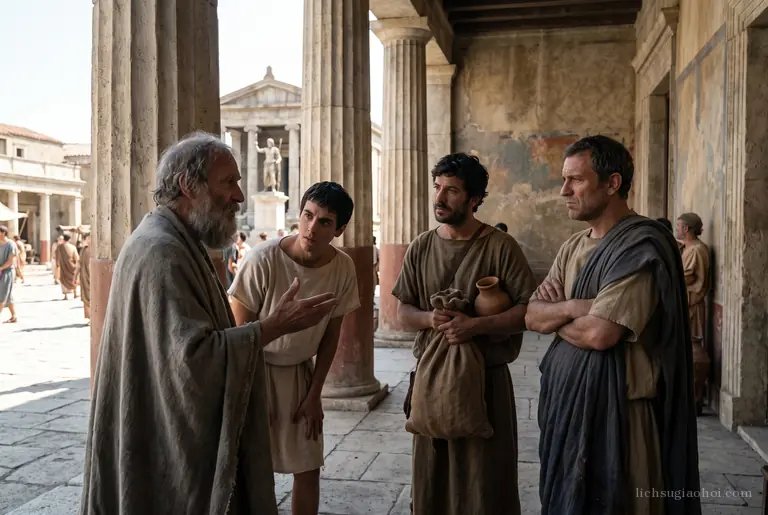
When Paul walked through Athens decades later, among a forest of statues and shrines, he found a weathered stone altar with an inscription that said it all: “TO AN UNKNOWN GOD” (Acts 17:23).
In Alexandria, in Egypt, home to a very large Jewish community, Greek questions and Jewish faith had been meeting for a long time. Jewish children there had grown more at home in Greek than in Hebrew. About three hundred years before Christ, Jewish scholars there began translating the Hebrew Scriptures into Greek, so that their children would not lose touch with God’s Word, starting with the five books of Moses; the other books followed over the next two centuries. Their translation is called the Septuagint, from the Latin word for “seventy,” because an old legend says seventy-two men translated it together, six from each of the twelve tribes, and finished in seventy-two days. For the first time, people who were not Jews could unroll the scrolls and read Moses, King David, and the prophets for themselves. Later, the first Christians used this same translation for prayer, worship, and teaching. Most of the Old Testament quotations in the New Testament follow it.
Now the last age of the Sibyl’s song has come; the great line of the centuries begins anew. Now the Virgin returns, and the reign of Saturn; now a new child is sent down from high heaven.
A People Waiting
And Israel held on to something that neither Rome nor Greece had: faith in one God, who had promised never to abandon them.
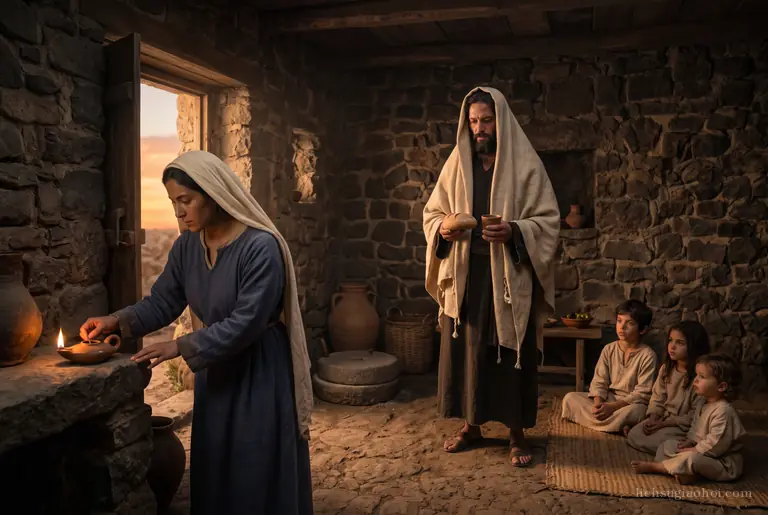
In Nazareth, every Friday evening was the same. The moment the sun set behind the western hills and the first three stars appeared, the Sabbath began, and all work in the fields and the kitchen stopped. The mother lit the olive-oil lamp. The father lifted a cup of wine and said the blessing over the day. Around the supper table, in the amber glow of the lamp, the children said together the prayer every Jewish child learned as soon as they could talk: “Hear, Israel: The LORD is our God. The LORD is one” (Deut 6:4). Jews still say those words every morning and every evening. Their faith lived at the table, in prayer, and in the stories their grandparents told, before it ever lived in books.
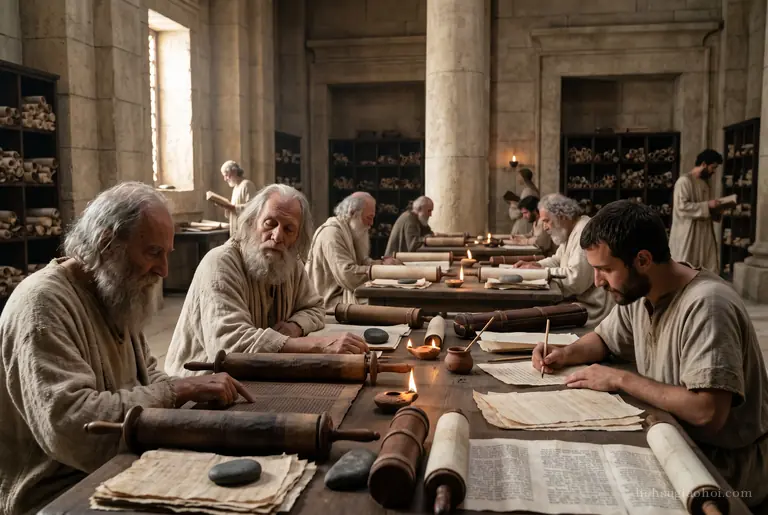
Those stories were written down on scrolls of parchment or papyrus and kept with great care in a wooden chest in the village synagogue. On Sabbath mornings the villagers set down their plows and hoes, put on clean clothes, and walked together to hear the Law of Moses and the prophets read aloud. The scrolls were copied letter by letter, and no one dared to get a single stroke wrong. Scribes counted every letter and every line, and a sheet with one mistake was set aside and copied again from the start.
In those books one promise came back again and again: one day God would send an Anointed One, in Hebrew Mashiah, in Greek Christos. He would come from the line of King David. He would stand with the poor and throw open the prison doors for captives. One passage in Isaiah gave him a voice of his own, the passage Jesus himself would one day unroll and read aloud in the synagogue of Nazareth (Luke 4:16–21): “The Lord GOD’s Spirit is on me, because the LORD has anointed me to preach good news to the humble. He has sent me to bind up the broken hearted, to proclaim liberty to the captives” (Isa 61:1). The farmer behind his plow, the woman drawing water, the old man sitting by the village gate: all of them carried that hope, the way people wait for rain in a drought.
But not everyone waited in the same way.
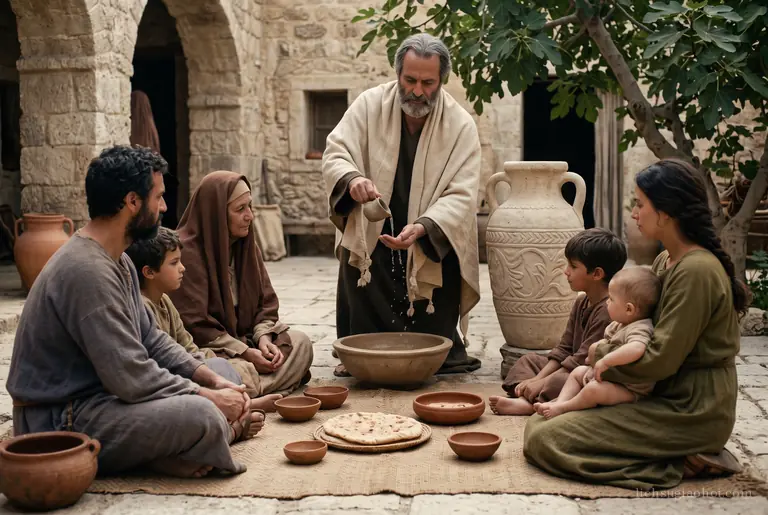
The Pharisees were the devout laymen of town and village, deeply respected because they lived close to their neighbors. They lived among ordinary folk and taught them to keep the Law in small, everyday things: washing their hands before eating, keeping the Sabbath, paying the tithe even on the herbs of the kitchen garden, “mint, dill, and cumin,” as Jesus would later say (Matt 23:23). They believed the nation had fallen under foreign rule because it had broken the covenant, and that if the whole people kept the Law, God would act. Josephus counted more than six thousand of them in Herod’s day.
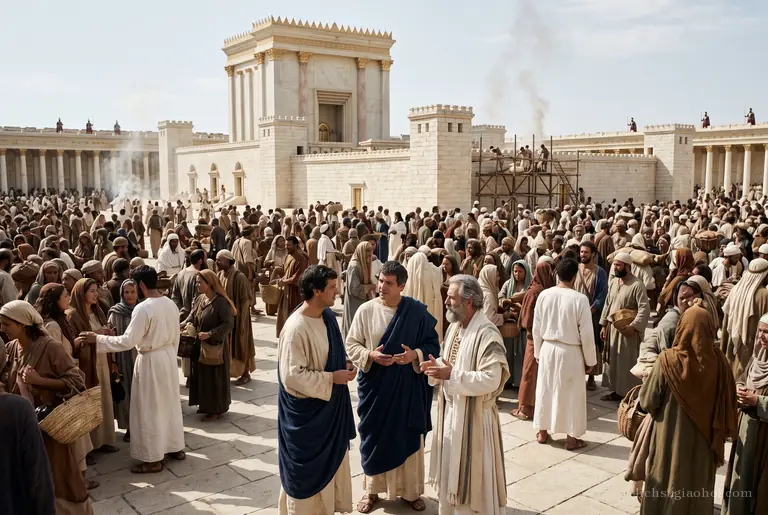
In Jerusalem there were the Sadducees, most of them from the wealthy high-priestly families and the powerful aristocracy. They looked after the splendid Temple that King Herod had set out to rebuild, a dazzling building of white stone and gold, and they usually chose to stay on good terms with the Romans, to protect their position, their revenues, and the Temple itself. Herod began the work around 20 BC, and builders were still at it decades later. Years afterward, people in Jerusalem would say, “It took forty-six years to build this temple!” (John 2:20). The Temple was the heart of the nation. At every great feast, tens of thousands of pilgrims poured into its courts from far and wide.
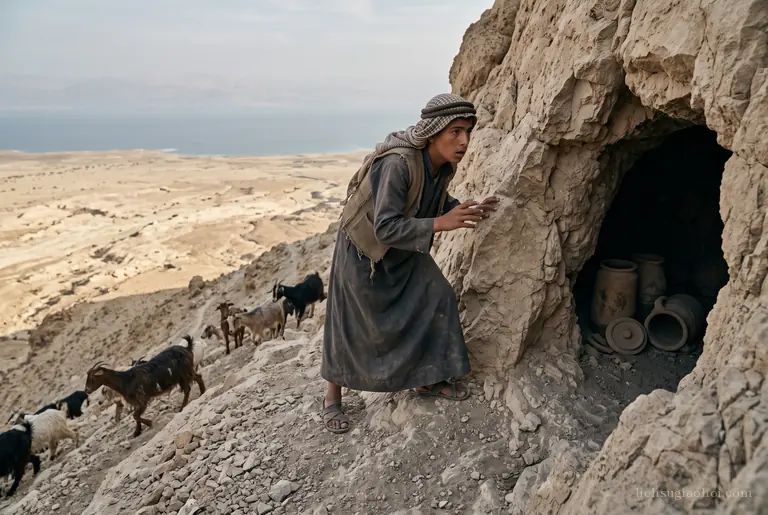
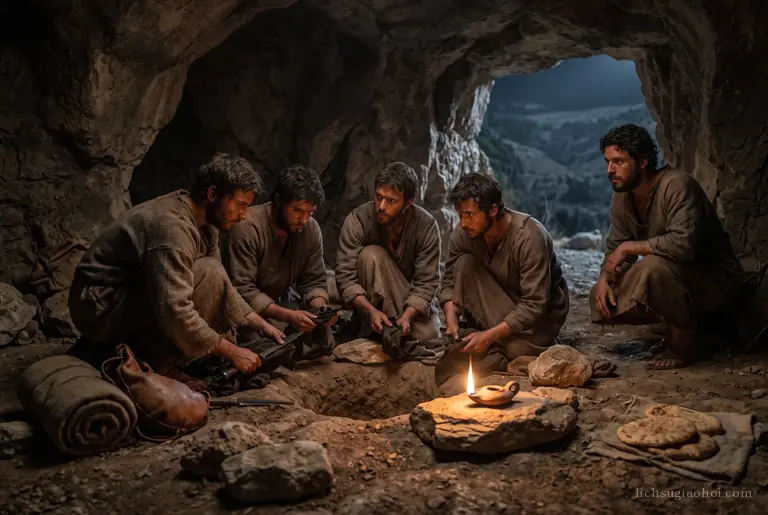
Others left the cities behind altogether. The Essenes, disgusted that the priestly elite bowed to pagan masters, held that the Temple had been defiled. So they went out into the desert near the Dead Sea and formed secluded communities of strict purity, unceasing prayer, and copying of Scripture, to live a pure life, to pray, and to copy their sacred books while they waited for the day God would step in. Josephus and the Jewish writer Philo both put their number at about four thousand. Nearly two thousand years later, in 1947, a young Bedouin goatherd named Muhammad edh-Dhib, looking for a stray goat among the cliffs at Qumran, threw a stone into a cave and heard a clay jar shatter. He climbed in and found sealed jars. Inside were the Dead Sea Scrolls, hidden by the community most likely before the Roman legions reached Qumran in AD 68.
Among them was a complete scroll of the prophet Isaiah, copied around 125 BC, about a thousand years older than any Hebrew manuscript of Isaiah known before. It is kept today in the Shrine of the Book at the Israel Museum in Jerusalem.
And some, the Zealots, were the most impatient of all, patriots who refused to sit and wait. They believed the Kingdom of God would come only when the Romans were driven out by the sword. The Judas of the Sepphoris revolt was one of them. In AD 6, when Rome removed Herod’s son, put Judea under a Roman prefect, and ordered a census of property for taxes, a man called Judas of Galilee rose up against it and urged his people to refuse the tribute. Josephus says he told the people that the census was “no better than an introduction to slavery.” Some historians think he was the Judas of Sepphoris; others think he was a different man. The Acts of the Apostles still remembers him: “Judas of Galilee rose up in the days of the enrollment, and drew away some people after him” (Acts 5:37). For more than sixty years afterward, men of that spirit took up arms again and again, one fallen generation after another, until the day in AD 70 when Roman legions stormed Jerusalem and razed the city and the Temple.
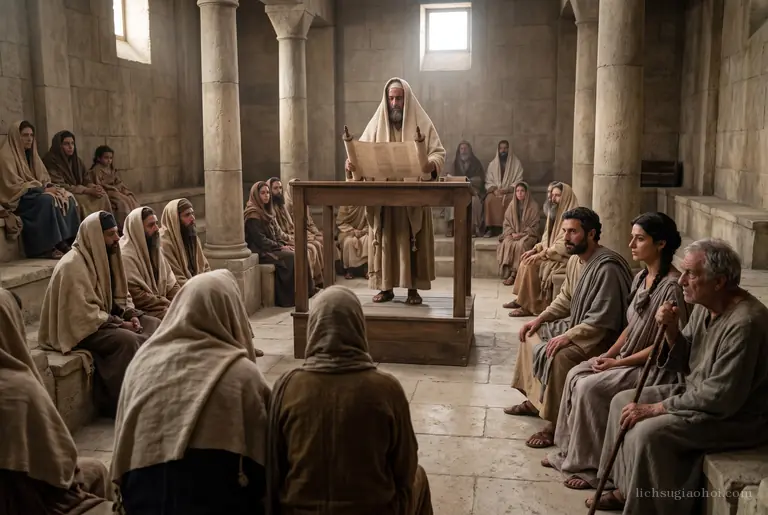
Jews lived far beyond their homeland, too. Across the Mediterranean and into Mesopotamia, from Babylon on the Euphrates to Alexandria, from Antioch to Rome, every city had a Jewish quarter with its own synagogue. Philo claimed that Egypt alone held a million Jews. The Greek geographer Strabo, quoted by Josephus, wrote that it was hard to find any place in the world where they had not settled.
They came home, too, for the pilgrim feasts, and Jerusalem built hostels for them. In 1913, on the hill south of the Temple Mount, archaeologists dug up a limestone slab cut in Greek. It is the dedication of a synagogue from before the Romans destroyed the city. “Theodotus, son of Vettenos, priest and ruler of the synagogue, son of a ruler of the synagogue, grandson of a ruler of the synagogue, built the synagogue for the reading of the Law and the teaching of the commandments, and the guest house, the rooms, and the water installations, as lodging for those who need it, coming from abroad.”
In those synagogues far from home, a few Greeks or Romans often slipped into the back rows or stood by the porch, listening hard as the Scriptures were read in Greek. They were not Jews, and they had not been circumcised, but they had grown tired of the many gods, loved the God of Israel, and tried to live by the Ten Commandments. People called them “God-fearers.” Acts describes one of them, a Roman centurion stationed at Caesarea named Cornelius, as “a devout man, and one who feared God with all his house” (Acts 10:2). Before long, when the apostles set out on the roads, these would be the first to open their arms to the Gospel.
The Door Is Open
The roads were there. The common language was there. In city after city there were synagogues, with a few Gentiles in the back rows listening to the words of the prophets. Believers look at all this and see the hand of God quietly preparing the way. Those who do not believe still have to admit that never before had news been able to travel so far, so fast.
All that was missing was Someone. And that Someone grew up in Nazareth, a poor hill village never once named in the whole Old Testament. Josephus, who once commanded the Jewish forces in Galilee and listed dozens of its towns, never mentions it either. It was so small that when a Galilean named Nathanael first heard of the Messiah from there, he asked, “Can any good thing come out of Nazareth?” (John 1:46).
Where to See It Today
Sepphoris is now Tzippori National Park, a short drive north of Nazareth, with the streets and mosaic floors of the city Herod Antipas rebuilt after the fire, among them the woman’s face nicknamed the “Mona Lisa of Galilee.” An old tradition says Mary’s parents, Joachim and Anne, came from there, and the ruins of a Crusader church of Saint Anne stand at the foot of the hill.
Herodium, near Bethlehem, is the hill fortress where the Israeli archaeologist Ehud Netzer found the remains of Herod’s tomb in 2007.
Nazareth is now a city in northern Israel. The Basilica of the Annunciation, dedicated in 1969, rises over the ancient grotto and the remains of first-century houses.
Kalkriese, in Germany, has a museum and park on the site where, in AD 9, thirteen years after he burned Sepphoris, Varus lost three Roman legions in the Teutoburg Forest.
The Appian Way can still be walked south of Rome, in the Appia Antica park, on the original paving stones. In Rome itself, the round Mausoleum of Augustus still stands beside the Tiber and reopened to visitors in 2021.
Augustus’s own account of his reign survives on the walls of the Temple of Augustus and Rome in Ankara, Turkey. A modern copy runs along the outside wall of the museum of the Ara Pacis, the Altar of Augustan Peace, in Rome.
The Areopagus, the rocky hill below the Acropolis in Athens where Paul spoke of the unknown god, has a bronze plaque at its foot with his speech from Acts 17.
The Isaiah Scroll from Qumran is kept in the Shrine of the Book at the Israel Museum in Jerusalem, where a full-size facsimile is on display. The caves and the ruins of the Qumran community can be visited above the northwestern shore of the Dead Sea, and the scrolls can be read online at deadseascrolls.org.il.